Showing posts with label Sustainability. Show all posts

Friday, April 8, 2011

Sign Here to Reduce Toxic Chemicals in the US

Want to protect citizens from toxic substances?

Today I got a call from the American Sustainable Business Council (ASBC) asking me to support their efforts in helping to reduce our exposure to toxic chemicals.

If you want to live in a safer world, please take a minute to sign this petition for the Toxic Substance Control Act (TSCA). I just signed it and it literally took me less than 60 seconds.

Thank you for taking the lead on this ASBC!

Thursday, April 7, 2011

Experts For Sustainable Design Projects

Looking for an expert who can assist you with a sustainable interior design project?

The American Society for Interior Designers ASID has chapters throughout the United States listing members who can assist with your projects. Some of the chapters also include an advanced search where you can find designers with expertise in sustainable design. Here are a few examples:

ASID Florida North Chapter Find a Designer

ASID Florida West Coast Chapter Find a Designer

ASID California Central Nevada Chapter Find a Designer

If you have a story you'd like to tell about a sustainable design project with an ASID expert, please leave a comment.

Thursday, September 30, 2010

I Don't Own a Blow Dryer


"I don't own a blow dryer. You should see the looks from hair dressers when I say that out loud. Oh well . . . it goes with the lack of makeup I wear."

Barbara Virany
CFP & Portfolio Manager
Pittsburgh, PA

Friday, September 17, 2010

Water or Grass Yard?


"I think I would rather have water for a yard than grass! Water...it come in...it goes out... & occasionally you have to pick up a bit of left-over crap! No mowing, weeding, pruning . . . AAARRRGH! Must be the Alaskan in me!"

Tish Young Haataia
Myrtle Creek, OR
Pelican, AK (hometown)

Saturday, March 27, 2010

Earth Hour Over Candlelight

On Saturday night, my husband and I celebrated Earth Hour at home. For dinner, we had Kirkland wild Alaskan Sockeye Salmon from Costco over salad with Annie's Naturals organic Caesar dressing. He cooked the salmon on Fire & Flavor cedar planks on our outdoor grill and I made the Caesar salad in the kitchen.

After we put the salmon over the salad, he hit the breaker switch and turned off all the power to the house. We enjoyed our candlelight dinner for one hour and seventeen minutes, so in case you need an extra few minutes, we can lend you a few.

We talked about how quiet it was without hearing any air conditioning, music or anything at all running in the house. It was surprisingly dark in the house without all the LED lights that shine from the kitchen appliances and television equipment. We're so accustomed to them that we don't even notice until they're gone. We have dimmers and motion sensors on almost all the switches in our home, but "off" is much darker than dim lighting!

We talked about how big the impact can be on any cause when you multiply the number of participants. We also talked about how much of an impact this could have worldwide if everybody participated. We walked out to our backyard and looked at our neighbors' houses and everyone else had their lights on, so they obviously didn't get the Earth Hour memo. It was a bright moonlight night, so it was very easy to walk in our backyard. I could take on some guilt and say that I didn't do anything to promote it in my neighborhood, but I certainly can next year!

Earth Hour was sponsored by the World Wildlife Foundation. What did you do for Earth Hour? Please feel free to leave a comment.

Monday, March 15, 2010

Green CPA Looks Forward to the Future

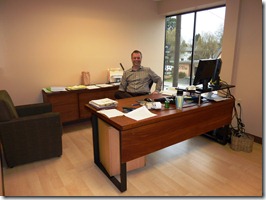
Today I had the privilege of talking with Brian Setzler, MBA, CPA, and Co-Founder of TriLibrium, a P1000217“green CPA” firm in Portland, OR. The “tri” in TriLibrium stands for triple bottom line and the “librium” stands for equilibrium. To learn more, read their Story on their website.
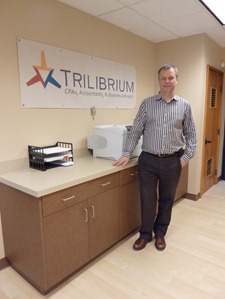
Here are just a few things I got out of my meeting with Brian that you might want to apply to your business:

Look forward to the future. Brian says that traditional CPAs spend 80% of their time looking back and reporting what already happened. One of the key things that sets TriLibrium apart is that they encourage their clients to spend 80% of their time looking forward at what they can improve in the future. Once decisions are made and the bills are paid, you can’t do too much to change the past. TriLibrium encourages their clients to think about their strategy and spending going forward and what they can do to become a more sustainable company.

P1000210

Get rid of the garbage. This sounds unthinkable for most businesses because most Americans have a throw-away mentality. Brian showed me a paper bag in the closet that’s there for emergency just in case something is no longer useful and can’t be recycled. The only thing in the bag that day was a small piece of plastic film from some packaging. When someone goes to the garbage in the closet, they joke with each other that it’s “the walk of shame.” In their kitchen area you won’t find any disposable cups. They’re all the real thing.

P1000209Replace garbage cans with recycle bins. If we all focused on producing less garbage and separating the garbage we did make, our landfill growth rate might slow down a bit. Replace the garbage cans in your office with recycle bins for paper, aluminum, glass, batteries, and any other common items regularly consumed by employees and your business processes.

Involve employees in shaping the company. TriLibrium employees don’t feel oppressed with a lean and green work environment. They all have a say in defining the company. Below is a collage they put together with words and photos that describing their ideal company. So it’s no coincidence that TriLibrium employees get a weekly massage by a masseuse in the same building.

P1000212

See the bike in the picture? TriLibrium gives clients a bus ticket if they come to the TriLibrium office by bike or bus. Even clients partake in minimizing TriLibrium’s carbon footprint.
P1000213 - cropped

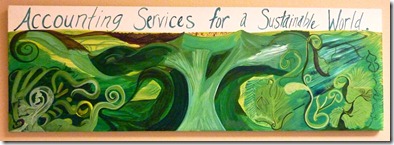
One of the other few works of art in the office is a painting entitled “Accounting Services for a Sustainable World” done by one of the employees, AndrĂ© Furin. Teachers take pride in their student’s work in K-12 schools every day, but this is usually where it ends. Why not include employee works of art demonstrating your company values?
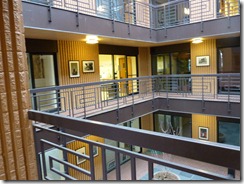
P1000218 Keep things simple.  The office has a courtyard entry from the center of the building. The courtyard includes a few large potted trees and a few chairs. When I entered TriLibrium’s second-floor office, I felt a sense of spaciousness and clarity. Because it’s a courtyard office, they’re able to light their office with a lot of natural light. There’s no place foP1000205 - corrected - Brian Setzlerr clutter here, just the essentials. I really got the sense that I was in a business with focus where people not only believe in the work they do, but also enjoy it. One of the keys to sustainability is to weed out things that don’t serve a clear purpose. Brian believes in transparency and authenticity and he helps his clients achieve these goals. Brian is a graduate of Bainbridge Graduate Institute and now serves as a staff member going back once a month to teach. “It’s a great place to make connections,” he says.

Become a B Corporation. When a company earns the status of a B Corporation, they’re making a public statement that they’re committed to using the power of business to solve social and environmental problems.

Use the GRI Reporting Framework. If you’re serious about sustainability, use the Global Reporting Initiative Reporting Framework to measure and report on the economic, environmental, and social performance of your company.

P1000198 - cropped - Brian Setzler

Say no. Brian invited me to check out their conference room, primarily lit by natural light, well as much as you can get in Portland, anyway. This March day happened to be unusually sunny for the green city which is usually covered by grey skies this time of year. The EnduraWood conference table is made of sunflower seeds, wood pulp and natural resins. One of the few things on the conference table was a copy of their 2009 Sustainability Report. I asked if I could have a copy and he very politely told me that they only printed ten copies, but I was welcome view the report on their website.

“We do very little printing in this office,” Brian said. “We only used three reams of paper our first year in business. When you hear the printer running in our office, you know it’s something that really must be printed.”

TriLibrium helps their clients develop business plans and strategies. Their typical client is a small to medium size company with under $10 million in revenue.

Keep up with the latest news and tips from Brian on his Green CPA blog.

Shapiro Uses Beeswax to Create Green Art

Have you heard of encaustic painting? Me neither, until today when I had the opportunity to meet encaustic artist, Rebecca Shapiro, at her studio in Portland, OR. Unlike entering the studio of an artist who works with oil paints, the studio of an artist who works with beeswax smells refreshing and delightful. The melted wax is a form of artistic aromatherapy.

Here's what Rebecca has to say about her art:

Influenced by a childhood in the Pacific Northwest, I strive for sustainable practices in my studio and earth friendly materials in my mediums. I have always embraced a green heart and am currently exploring what it means to be a sustainable artist seeking kinship between art, nature and the human experience. I hope my art will help us all remember the interconnectedness of life.

A few years ago, I switched to encaustic because it is a more earth friendly choice for me. There is very little waste and I don't have to wash anything down the sink when I rinse my brushes. There is also a satisfying unity between the plants that inspire me, the bees that pollinate them and the beeswax. Each layer of wax allows me to be innovative, building my subject with glorious textures and ethereal depth. Sometimes, forty to fifty layers of wax are fused in a piece to abstract the essence of a plant. This sensuous medium gives me the freedom to express my love for the wild braid of colors, lines and forms in plants.

As being green and sustainable practices are being implemented in business, I would like to see businesses take their commitment a step further by purchasing/leasing art from artists who share the similar philosophies about being green. I would like to see a new breed of art patron emerge, that of the eco-art collector. These are people and organizations who use their dollars and support artists and their art who are considering their materials, studio practices and personal philosophy and in some cases, even their subject matter.

So, just what is sustainable fine art? In a nutshell, sustainable means to be made from renewable resources without depleting future resources, something that can continue indefinitely. If you look back through time, art certainly does that. Look at the paintings of Lascaux, DaVinci or Picasso. These works can be defined as sustainable because so far, they have continued indefinitely and we want to do everything to conserve them.

But now, things have changed. Sustainable fine art can’t just mean that you’ve created an image worthy of preservation. Sustainable fine art means that you, as an artist, must consider your materials, your studio practices and your personal philosophy. It means that you, as an art collector, use your dollars to support sustainable art and create a new breed known as the eco-art collector.


No, what I’m talking about is digging deeper into what sustainability means and apply art to the cradle to cradle concept. Cradle to cradle asks us to transform the way we make things – the way we make art. When a product returns to its industry at the end of a useful life and its materials are used to make valuable new products that do not return to the landfill, this is sustainable.

Why not design products so safe they don’t need regulation? Imagine a relationship between artist and eco-art collector where the artwork is returned, reworked and reinvented at the end of its life. Imagine a painting that has served its purpose, tossed on your garden for composting which feeds plants that are used to create pigments for future use.


There is amazing fine art out there made from recycled and reclaimed materials. But what about the fine artist like me that uses paints, pencils, inks, charcoals, pastels, paper, adhesives, varnishes, photography, etc? I might be green in my beliefs, studio practices and imagery but what if my medium isn’t sustainable? How can I create art but make choices that leave little or no impact? I don’t have all the answers but it’s worth having a conversation and exploring.

If you're looking for beautiful botanical art, check out Shapiro's work. Her pieces are ideal conversation-starters in locations such as:

  • flower shops
  • natural food stores
  • aromatherapy shops
  • green spas
  • anyplace that sells honey or bee products
  • green art galleries
  • businesses located near bee farms
  • organic or healthful restaurants
  • botanical garden shops
  • natural museum stores
If you have more ideas about where encaustic art might be featured, or you have something else you'd like to say, please leave a comment and add to the buzz about encaustic art! It's safe art without the sting of toxins.

Thursday, March 4, 2010

Support Triple Bottom Line Companies

Dr. Lorraine Haataia encourages viewers to pay attention to the companies they're supporting, and to choose to buy from triple bottom line companies like Patagonia, Whole Foods Market, Chipotle and Nike.

Monday, March 1, 2010

Celebrate Climate Care Day on March 26

Learn more about Climate Care Day in this short presentation:


Be creative and find a way to make this work for your organization!

Wednesday, January 20, 2010

Walmart to Host Sustainability Summit

Walmart Canada is hosting a summit on sustainability, highlighting the very real business case for going green. Collaborating across industry sectors, the Summit will accelerate the implementation of profitable, environmentally sustainable business practices.

On February 10, 2010, Walmart Canada, along with leading Canadian CEOs, heads of government, NGOs and environmental leaders, will workshop new ideas focusing on Energy, Waste & Material Management, and Green Products & Solutions in downtown Vancouver, BC.

Presenters include Dr. David Suzuki and David Cheesewright:

Dr. David Suzuki – Keynote Speaker

David Suzuki, Co-Founder of the David Suzuki Foundation, is an award-winning scientist, environmentalist and broadcaster. He is renowned for his radio and television programs that explain the complexities of the natural
sciences in a compelling, easily understood way. Learn more...

David Cheesewright

David Cheesewright is the President and CEO of Walmart Canada Corp., which operates a growing chain of 300 locations nationwide. Walmart Canada employs 80,000 Canadians and serves more than one million customers
each day. Learn more...


“For the good of the planet we must share sustainable business practices across all business sectors. We have a huge opportunity to drive environmental collaboration.”

David Cheesewright, President & CEO, Walmart Canada Corp.

Wednesday, November 18, 2009

Take the Natural Step & Olympic Leap

Are you familiar with Natural Step? If not, see Olympic testimonials from Canadian Whistlers here:

Monday, November 2, 2009

Obama Visits Largest Solar Plant in Nation

Want to learn more about solar energy in the "sunshine state?" Check out this video:


For more details about Florida Power & Light's Next Generation Solar Energy Center in DeSoto County, Florida, see FPL's Project Facts & Benefits.

Monday, July 13, 2009

No Impact Man Enlightens World

No Impact Man is one of the most inspiring documentaries I've ever seen!

Colin Beavan and his wife, Michelle Conlin, inspire the world by changing their way of life in the Big Apple. Colin believes that we all have a voice and we all need to take responsibility for our own actions. But Colin and Michelle aren't just preaching; they're the real thing! They phased in big changes in their own lives over a one year period to reduce their impact.

Colin and Michelle show how individual customers can make daily decisions that can also change corporations. Sometime in the near future, I hope to meet this couple I respect very much.

Get to know them in their reality-TV-like documentary where they welcome the world into their New York City home:


Michelle says the no impact way of life gave her the following benefits:
  • time slowed down
  • she felt like she lived more in the moment
  • she was much happier
  • her family became much closer
Change yourself to change the world with the No Impact Project.

Tuesday, March 24, 2009

Barba's Bioclimatic Approach Saves Energy

Javier Barba, principal architect with Estudio BC Architects in Barcelona, designs with respect for nature and its resources. His bioclimatic approach includes incorporating earth-sheltering roofs and harmonizing structures with their surroundings to take advantage of the local climate conditions and good views. His timeless buildings are positioned to take advantage of natural light while avoiding severe solar conditions. Learn more about his principles on this CNN interview:

Thursday, February 26, 2009

Reeds Carpets Shares Commitment to BS 8901

Malcolm Hicken, Non-Executive Director of Reeds Carpets, presents Reeds' commitment to reducing the environmental impact of carpet waste in the exhibition & events industry. "Carpet is the second biggest waste generator within the industry," he says, "whose great concerns are about the mountains of post-exhibition carpeting that is being dumped into landfills every year. The industry tally is now regarded as totaling a mind-boggling, estimate, twelve million square meters of non-biodegradable floor covering every year!"

Hicken believes that BS 8901 is a win-win for suppliers, planners and the entire events planning industry and says they're working on becoming more environmentally sustainable by seeking out new processes, and developing a carpeting that will be generally recyclable.


All of this is good, but I don't understand why he didn't talk about developing flooring that could be reused many times. Producing carpeting that's made from recyclable materials is a step in the right direction, but this recycled carpeting will then just end up in the landfills too. Why not create processes and rental systems for temporary use of floor coverings that can be reused a number of times at other events? Or why not partner with convention centers and hotels to develop floor covering that is more flexible and can be swapped out as needed for various events? A step in the right direction is good, but a leap would be even better!

Saturday, February 14, 2009

Top 10 Ways to Green Your Valentine's Day

Check out these great gift ideas from University of Waterloo Faculty of Environment students!

Thursday, October 30, 2008

Szaky Turns Waste Into Sellable Products


Tom Szaky, Founder & CEO of TerraCycle, speaking about graffiti and turning waste into sellable products at the IDEA Conference in New York City on October 30, 2008.

http://link.brightcove.com/services/link/bcpid1370868150/bctid6625327001

Saturday, January 26, 2008

Blue Gold Reveals World Water Management

If you haven't already seen Blue Gold: World Water Wars, learn more about the world's water by reading the book or watching the movie. Check out the trailer:


This book and movie will increase your appreciation of water and give you some ideas about what you can do to help protect this vital resource.

Friday, November 24, 2006

See The Corporation

For a behind-the-scenes perspective on executives and how they interface with the legal "persons" they run (i.e., the companies), see the international award winning documentary, The Corporation. Check out the trailer:

Saturday, October 7, 2006

Corporate Climb to Mt. Sustainability

Ray Anderson, CEO of Interface Carpet, discusses the environment and corporate responsibility's climb to Mt. Sustainability. See this excerpt from the documentary, The Corporation.